
Asia Travel Guide & Information, Vietnam Travel Guide
Hanoi Old Quarter Guide – Where History, Street Food and Everyday Life Meet
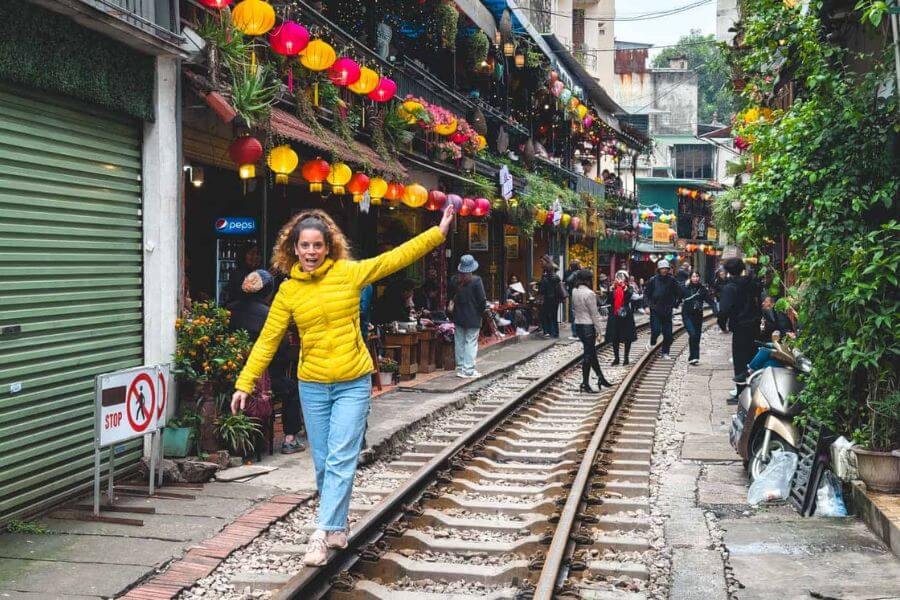
Oct
For travelers planning a hanoi tour, the Old Quarter is one of the best places to begin discovering Vietnam’s capital. It brings together much of what makes Hanoi distinctive: a long history of trade, traditional architecture, an extraordinary food culture and the everyday routines of people who live and work in the city.
That is what makes exploring it so rewarding. You can arrive with a list of places to see, but some of your favourite memories may come from the moments you never planned: a bowl of noodles at a busy local restaurant, an unexpected conversation with a shopkeeper or a quiet coffee overlooking the street.
This guide covers the Old Quarter’s history, the places worth visiting, the food to try and the practical details that will help you enjoy the neighbourhood without feeling overwhelmed.
What Makes Hanoi Old Quarter So Special?
The Old Quarter lies just north of Hoan Kiem Lake, in the historic centre of Hanoi. For centuries, this area developed as a commercial district, connecting merchants, craftspeople and customers through a dense network of streets.
Its traditional character is still visible today. Some streets retain associations with particular trades, while old shopfronts and narrow buildings reveal how businesses and homes have adapted to limited urban space over generations.
But the Old Quarter is not a preserved historical district where daily life has stopped. It has changed with Hanoi itself. Traditional businesses now stand alongside boutique hotels, contemporary cafés, travel agencies, souvenir shops and restaurants serving visitors from around the world.
This mixture can be confusing at first. A street that looks entirely commercial may contain a small family temple, while an unassuming doorway might lead to a courtyard or an upstairs café.
Rather than expecting every building to be a monument, look at the neighbourhood as a whole. Its character lies in the relationship between old and new, between commerce and community, and between the city’s past and its increasingly international present.
A Brief History of Hanoi’s Old Quarter
The history of the Old Quarter is closely connected to Hanoi’s development as a political and trading centre.
Hanoi, historically known as Thang Long, became the capital of Dai Viet in 1010 under King Ly Thai To. Over subsequent centuries, commercial activity expanded around the capital, and the area now associated with the Old Quarter became known for its network of craft and trading streets.
Many streets became associated with particular products or occupations. The traditional street names still reflect elements of this commercial history, although the businesses operating there have evolved considerably.
The familiar idea that every street was exclusively dedicated to one craft is an oversimplification. Trades changed over time, businesses moved and modern development reshaped the district. Nevertheless, the historic relationship between streets and commerce remains an important part of its identity.
Architecture tells another part of the story. Traditional tube houses, with relatively narrow street-facing façades and deeper interiors, developed in response to the layout of the neighbourhood and the demands of urban trade. Some have been renovated extensively, while others retain details of their earlier design.
The result is a district where history is not always obvious from a single building. You see it instead in the street pattern, the arrangement of shopfronts, the presence of temples and the way commercial activity continues to shape everyday life.
For visitors interested in understanding Hanoi beyond its most famous monuments, the Old Quarter provides an excellent introduction.
The Best Things to See in Hanoi Old Quarter
You can explore much of the Old Quarter on foot, especially if you begin around Hoan Kiem Lake. The following places offer a good balance of history, local atmosphere and practical sightseeing.
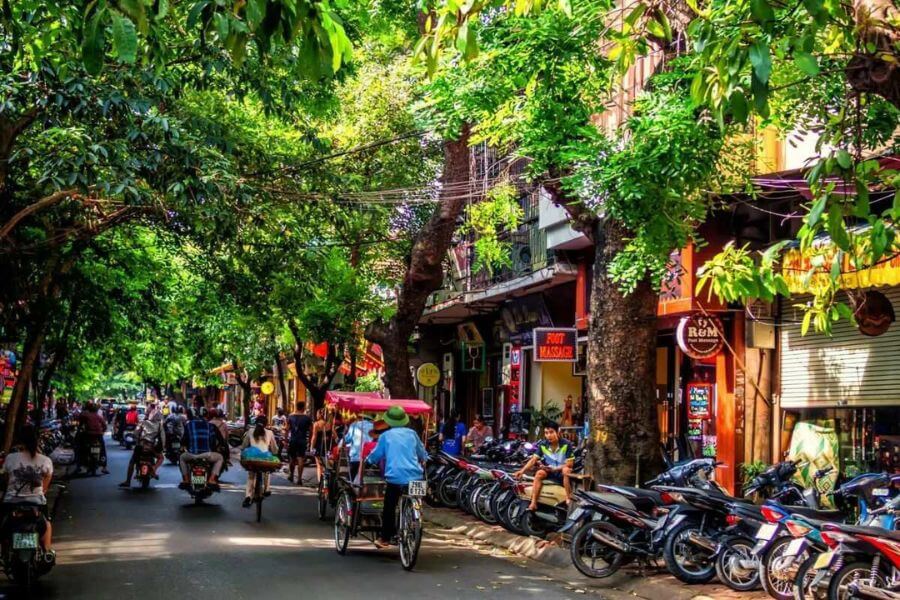
1. Hoan Kiem Lake: A Natural Starting Point
Hoan Kiem Lake sits beside the Old Quarter and provides a welcome contrast to the surrounding streets.
Early in the morning, the area is popular with local residents who come to walk, exercise, practise tai chi or meet friends. As the day progresses, cafés open, traffic builds and visitors begin arriving from nearby hotels.
The lake is associated with the legend of a magical sword returned to a golden turtle, a story deeply embedded in Hanoi’s cultural identity. Ngoc Son Temple, reached by the distinctive red Huc Bridge, is one of the area’s most recognisable landmarks.
Allow time to walk around the water rather than simply taking a photograph of the bridge. From different points along the shore, you can see how the lake connects the historic centre with the wider city.
If you visit early, you may experience a quieter side of Hanoi before the busiest sightseeing hours begin.
2. The Traditional Streets: Discover the Old Quarter on Foot
The Old Quarter is best explored as a network of streets rather than a single attraction.
As you walk, pay attention to the different kinds of businesses occupying the ground floors. You may see shops selling household goods, traditional medicines, clothing, metal products, food ingredients or locally made souvenirs. The exact mix varies from street to street, reflecting the area’s long commercial history and ongoing changes.
Some streets are crowded with parked motorbikes and delivery vehicles. Others contain cafés, small temples or quieter residential passages. A short detour can reveal a completely different atmosphere from the main road.
You do not need to follow a strict route. Start near Hoan Kiem Lake, head into the Old Quarter and allow yourself time to explore.
For travellers who enjoy photography, architecture or local culture, the most interesting details are often at street level: carved wooden doors, narrow balconies, faded shop signs and the everyday interactions taking place outside family businesses.
3. Dong Xuan Market: A Glimpse of Hanoi’s Trading Culture
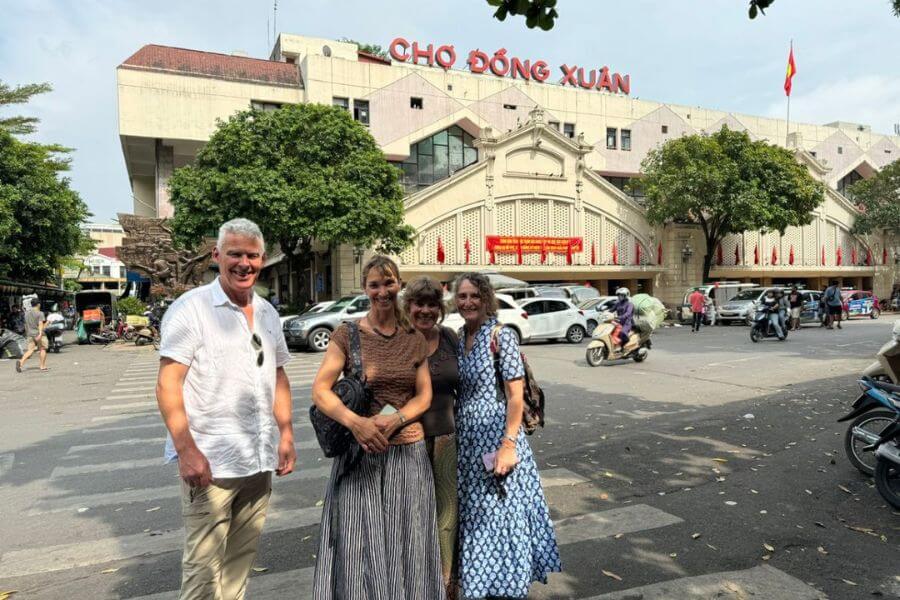
Dong Xuan Market is one of the Old Quarter’s best-known commercial landmarks.
The large market building and its surrounding streets are associated with wholesale and retail trading, with goods ranging from clothing and household products to food and other everyday necessities.
For visitors, the market offers a different perspective from the boutique shops and tourist-oriented businesses found elsewhere in the neighbourhood. It is a working commercial environment, and its atmosphere can be busy and crowded.
Visit with realistic expectations. This is not necessarily a quiet place to browse slowly, and not every section is designed for tourists. Watch how goods are displayed and moved, observe the rhythm of transactions and explore the surrounding streets if you want to see more of the neighbourhood’s trading life.
If you intend to buy something, check the price and product details before paying. Keep your belongings secure and be mindful of other shoppers and traders.
4. Bach Ma Temple: A Quieter Historical Stop
Bach Ma Temple is one of the historic religious sites associated with Hanoi’s Old Quarter.
Unlike the larger landmarks that attract substantial visitor numbers, a small temple can offer a more intimate glimpse of local religious traditions. Visitors may encounter incense, offerings and people stopping briefly to pray as part of their daily routines.
When visiting, dress respectfully, keep your voice low and follow any instructions posted at the entrance. Religious sites are places of worship as well as cultural attractions, so approach them with consideration for the people using them.
Opening arrangements may change, so check current information before making a special trip.
5. The French Quarter: A Different Side of Hanoi
Although the French Quarter is distinct from the Old Quarter, it is close enough to combine the two during the same visit.
The contrast is immediately noticeable. The French Quarter has broader streets, grander façades and buildings reflecting French colonial-era urban planning. The Old Quarter, by comparison, is characterised by a denser street network and a more intimate commercial environment.
Walking between the two areas offers a useful way to understand how different periods of Hanoi’s history have influenced the capital.
Rather than rushing from one landmark to another, take time to notice the differences in architecture, street layout and the way businesses occupy the buildings.
What to Eat in Hanoi Old Quarter
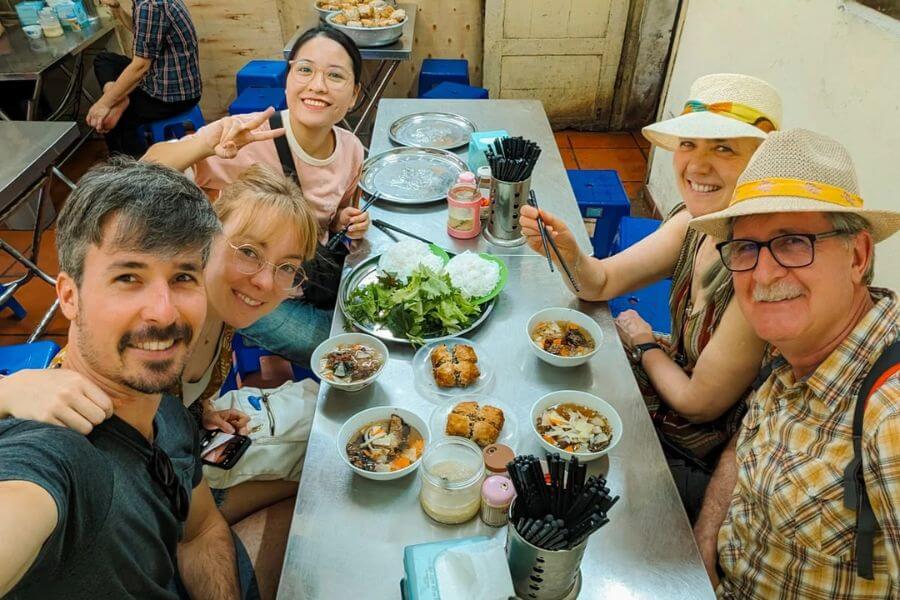
Food is one of the main reasons to spend time in the Old Quarter. You can eat well at a modest local restaurant, a small family-run establishment or a more contemporary dining venue.
The best approach is to try a few dishes over the course of the day rather than treating food as a quick stop between sightseeing activities.
Pho: A Classic Vietnamese Breakfast
Pho is an obvious starting point, but it remains worth trying in Hanoi.
The dish combines rice noodles, broth, herbs and meat, usually beef or chicken. Northern-style pho is often known for its clear, aromatic broth and a relatively restrained balance of flavours.
Many local restaurants specialise in serving pho during the morning, so breakfast is a good time to try it. You will often find that people arrive, eat and continue with their day without spending much time at the table.
If you’re unfamiliar with Vietnamese food, watch how other diners season their bowls and ask the staff for help if you are unsure what to add.
Bun Cha: A Hanoi Favourite
Bun cha is closely associated with Hanoi’s food culture.
It typically consists of grilled pork served with rice noodles, fresh herbs and a dipping sauce. The combination of smoky meat, herbs and sweet-savoury flavours makes it a satisfying lunch.
The ingredients are usually served separately, allowing you to combine them as you eat. Some restaurants also offer fried spring rolls alongside the main dish.
Look for a restaurant that specialises in bun cha rather than choosing a place simply because it is close to a major attraction.
Banh Mi: A Convenient Bite Between Stops
If you’re exploring the Old Quarter throughout the day, banh mi is an easy option when you want something quick.
The Vietnamese baguette is filled with different combinations of meat, pâté, vegetables, herbs and sauces. Recipes vary from one vendor to another, making it worth trying more than one version if you have time.
Because banh mi is often prepared for takeaway, it also works well when you want to continue exploring rather than sit down for a full meal.
If you have food allergies or dietary restrictions, ask about the ingredients before ordering.
Egg Coffee: A Hanoi Specialty
Egg coffee has become one of Hanoi’s signature drinks.
It combines coffee with a rich, creamy egg-based topping, creating a drink that can feel closer to dessert than an ordinary cup of coffee. Some cafés serve it hot, while other variations are available depending on the establishment.
The experience is as much about the café as the drink itself. You may find egg coffee served in a small traditional space, an upstairs room overlooking the street or a more modern setting.
Take your time. Coffee culture is an important part of daily life in Hanoi, and sitting down for a drink offers a chance to pause between the city’s busier experiences.
How to Choose a Local Restaurant
A restaurant with a steady stream of customers can be a useful starting point, especially when the menu focuses on a small number of dishes. High turnover may mean food is prepared regularly, although it is not a guarantee of quality.
Look for clean food preparation areas where visible, and choose somewhere that appears well maintained. Check recent reviews if you’re uncertain, but don’t assume that the most heavily promoted restaurant will necessarily provide the best experience.
For travellers who want to try several dishes but don’t know where to begin, a local food guide can help explain ingredients, ordering customs and regional differences. This is particularly useful if you have limited time or want to explore beyond the most familiar Vietnamese dishes.
Shopping in Hanoi Old Quarter – What Is Worth Buying?
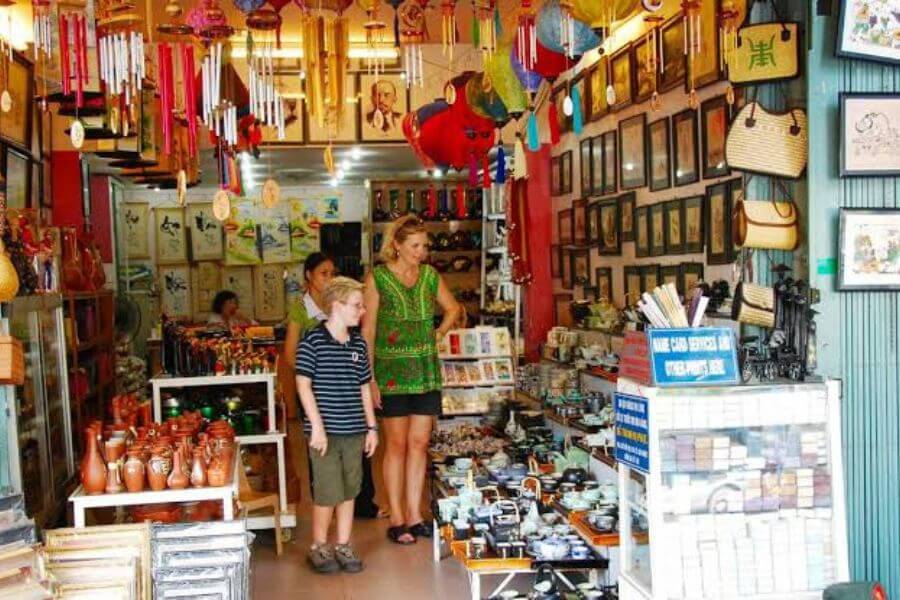
The Old Quarter offers a wide range of shopping opportunities, from everyday goods to souvenirs and locally made products.
Depending on the street, you may find clothing, accessories, handicrafts, coffee, tea, artwork, homeware and gifts to take home. Some shops cater primarily to visitors, while others continue to serve local customers.
If you’re buying souvenirs, look beyond the most obvious products. Vietnamese coffee, packaged tea, small craft items and locally designed goods can be practical choices, provided you check the quality and any relevant customs restrictions for your destination.
Prices vary between shops, and bargaining practices depend on the type of business. In markets or shops where negotiation is customary, keep the conversation friendly and agree on the price before completing the purchase.
Be cautious when buying branded goods at unusually low prices, and check product descriptions carefully if authenticity matters to you.
Shopping is more enjoyable when you have time to browse rather than feeling pressured to make a purchase at every stop.
How Much Time Should You Spend in Hanoi Old Quarter?
You can see some of the main sights in two or three hours, but that doesn’t leave much time for food, shopping or exploring beyond the most obvious streets.
For most first-time visitors, half a day is a useful starting point. It allows you to walk around Hoan Kiem Lake, explore several streets, visit a temple or market and stop for a meal or coffee.
A full day is better if you want to combine sightseeing with a more substantial food experience and shopping.
If you’re staying nearby, consider returning at different times rather than trying to do everything in one visit. An early morning walk, an afternoon coffee and an evening meal can reveal very different sides of the same neighbourhood.
Should You Explore Independently or Join a Guided Experience?
Exploring independently gives you the freedom to change direction, stop for coffee and spend as long as you like in a particular shop or neighbourhood.
For confident travellers, this can be one of the best ways to experience the Old Quarter.
A guided walking or food experience offers something different. A knowledgeable local guide can explain the history behind the streets, introduce you to unfamiliar dishes and help you understand customs that might otherwise be easy to miss.
A guide can also make the experience more efficient if you have limited time or want to focus on a specific interest, such as architecture, food or traditional crafts.
Neither approach is inherently better. You can explore independently for most of the day and arrange a guided experience when you want more context.
Planning Your Arrival at Noi Bai Airport
If the Old Quarter is your first stop in Hanoi, your travel experience begins well before you reach its narrow streets.
International arrivals at Noi Bai Airport may involve immigration, baggage collection, customs and onward transportation. The time required varies, so avoid scheduling a demanding sightseeing activity immediately after landing unless you have allowed sufficient flexibility.
For travellers who would appreciate additional support, Aviation Plus offers Fast Track and airport assistance services at Noi Bai International Airport. Depending on the service booked, assistance may include meeting the passenger and helping them navigate designated airport procedures.
Before booking, confirm the exact inclusions, meeting point and any information required from you. Fast Track does not remove immigration or customs requirements, and it cannot guarantee a specific processing time.
Once you know how you will reach your hotel, you can plan your first walk around the Old Quarter with fewer practical concerns.
If you’re arriving after a long flight, a relaxed first afternoon may be more enjoyable than trying to see every landmark immediately.
Frequently Asked Questions About Hanoi Old Quarter
Is Hanoi Old Quarter worth visiting?
Yes. The Old Quarter combines historic streets, local food, markets, cafés and everyday commercial activity in one of Hanoi’s most distinctive neighbourhoods. It is particularly worthwhile for first-time visitors who want to understand the city’s character beyond its major monuments.
What is the best time of day to visit?
Early morning is excellent for seeing local routines and enjoying a quieter walk around Hoan Kiem Lake. Afternoon is suitable for shopping and cafés, while evening offers a livelier atmosphere around restaurants and entertainment areas.
Is Hanoi Old Quarter walkable?
Many attractions are close enough to explore on foot, but the experience can be challenging because of crowded pavements, motorbikes and uneven walking surfaces. Comfortable shoes and attention to traffic are essential.
What food should I try in the Old Quarter?
Pho, bun cha, banh mi and egg coffee are good starting points. You can also explore other noodle dishes, grilled foods and local snacks depending on your preferences.
How long should I spend in the Old Quarter?
Allow at least half a day for a comfortable introduction. A full day is ideal if you want to combine sightseeing, shopping, food and coffee without rushing.
Can I explore the Old Quarter without a guide?
Yes. Independent exploration works well if you are comfortable navigating a busy city. A local guide can add historical context, explain food traditions and help you discover places that may be difficult to identify on your own.
Is the Old Quarter suitable for families?
Yes, although families should take care around traffic and busy pavements. Choose a manageable route, allow time for breaks and consider transportation for longer journeys.