
Asia Travel Guide & Information, AVIATION NEWS
Private Jet Etiquette: What First-Time Charter Passengers Should Know

Jun
Flying on a private jet for the first time can be an exciting yet unfamiliar experience. Unlike commercial air travel, private aviation follows a different set of expectations regarding privacy, punctuality, and passenger conduct. For travelers seeking premium aviation support and private travel solutions in Vietnam, Aviation Plus offers a range of airport and aviation services tailored to high-end travelers. Understanding proper private jet etiquette helps ensure a smooth journey while respecting fellow passengers, crew members, and the exclusive nature of private aviation.
Why Private Jet Etiquette Matters
While chartering a private aircraft offers unparalleled freedom and flexibility, it is not a lawless frontier. In fact, because the environment is significantly more intimate than a commercial first-class cabin, behavioral nuances are amplified. Proper conduct is not merely about old-world sophistication; it directly impacts operational safety, crew efficiency, and the overall comfort of everyone on board.
In luxury aviation travel, the relationship between passengers, ground crew, and pilots is highly collaborative. Unlike a commercial flight where passengers are anonymous faces in a crowd, a private charter treats you as an esteemed guest. Behaving with situational awareness ensures that the flight crew can execute their duties flawlessly. Furthermore, if you are flying as a guest of a business associate or a high-net-worth individual, respecting these boundaries is critical to maintaining professional and personal relationships.
Before the Flight: What Passengers Should Know
A seamless private flight begins long before the aircraft engines start. For a first-time private jet passenger, the pre-flight phase sets the tone for the entire trip.
Arrival Timing
One of the greatest luxuries of private travel is that the aircraft leaves on your schedule. However, this does not mean you should arrive precisely at departure time.
- The Golden Rule: Arrive at the terminal 15 to 30 minutes prior to your scheduled departure.
- This window allows the crew to load your luggage, clear final manifests, and conduct pre-flight briefings without rushing.
- If you are running late, notify your charter broker or operator immediately. The crew can often adjust, but ATC (Air Traffic Control) slots and airport parking limitations can be unforgiving.
Security Procedures
It is a common myth that private aviation bypasses security entirely. While you will not endure long, invasive lines, security is still tight and highly regulated.
- Government-mandated screening still occurs behind the scenes.
- Standard protocol requires your identification to be verified against the flight manifest before you step onto the ramp.
- All baggage is subject to physical inspection or X-ray screening depending on local international regulations.
Documentation
Never forget your credentials just because you are bypassing the commercial terminal.
- For domestic flights, valid government-issued photo identification (such as a driver’s license or passport) is mandatory.
- For international private travel, passports, visas, and health declarations are strictly checked by customs officers, who often meet the aircraft directly on the ramp or inside the private lounge.
Privacy Expectations
The private terminal is a sanctuary for high-profile individuals, executives, and celebrities.
- Maintain an atmosphere of quiet professionalism.
- Avoid staring at, approaching, or photographing other travelers utilizing the facilities.
- Assume that everyone in the terminal values their anonymity as much as you do.
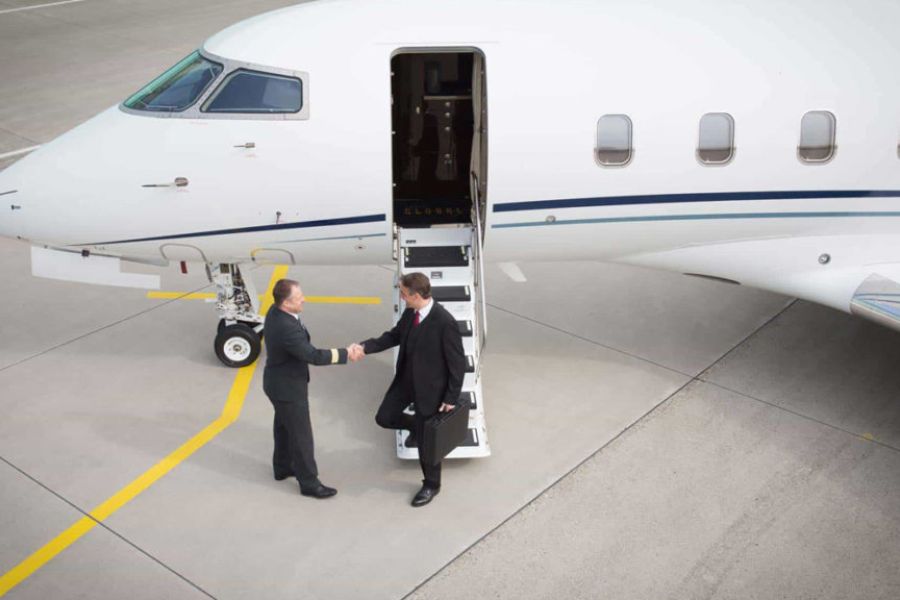
Boarding and Ground Operations Etiquette
Navigating the ground infrastructure smoothly requires an understanding of how private airports function.
Fixed-Base Operators (FBOs)
Private jets do not operate out of standard commercial terminals. Instead, they use specialized facilities known as Fixed-Base Operators (FBOs).
- Think of an FBO as a high-end concierge lounge for aircraft and passengers.
- Upon arrival, you will be greeted by customer service representatives who will handle your check-in and coordinate with your pilots.
- You can relax in the lounge, enjoy complimentary refreshments, or utilize private meeting rooms while the crew prepares the aircraft.
Staff Interactions
The hallmarks of a seasoned traveler are humility and courtesy. Treat the FBO desk staff, the line technicians handling the fuel, and your flight crew with the utmost respect.
- Address the pilots by their titles (e.g., Captain Smith).
- Remember that the ground staff work under strict safety timelines; demanding immediate deviations without checking with your crew can disrupt safety protocols.
Luggage Handling
Space on a private jet is governed by weight, balance, and aircraft size.
- Communicate early: Inform your charter coordinator in advance if you plan to bring oversized items like golf clubs, skis, or heavy musical instruments.
- Soft-sided luggage is preferred: Unlike commercial cargo holds, private jet baggage compartments often have unique geometries. Soft duffel bags and flexible suitcases are much easier to pack than rigid, hard-shell cases.
- Hazardous materials: Just like commercial flights, lithium batteries, flammable liquids, and certain defense sprays are restricted.
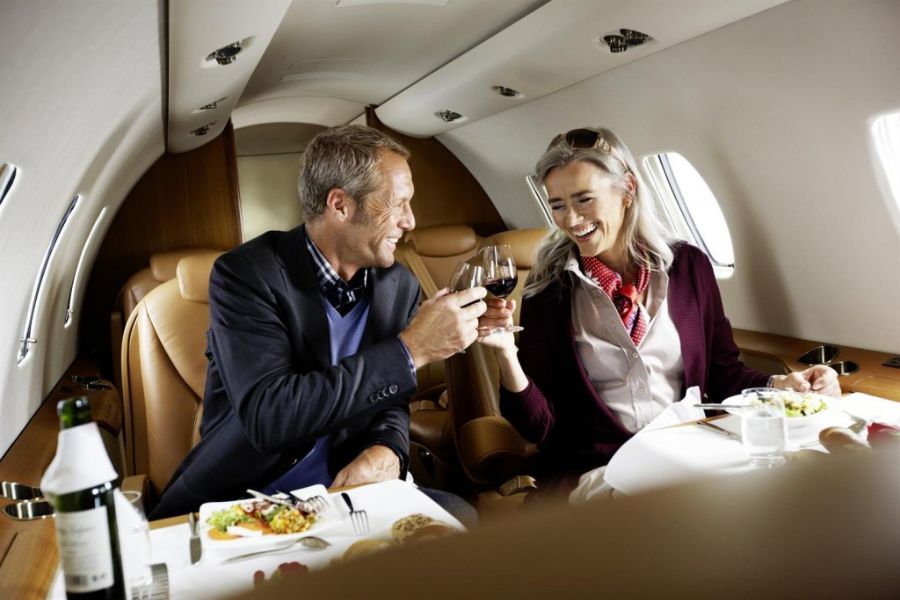
In-Flight Etiquette on a Private Jet
Once you step aboard, the aircraft cabin becomes your private lounge or mobile office. Observing these private jet travel tips ensures a harmonious environment.
On a private charter, the person paying for the flight (the host) always chooses their seat first. Usually, this is the forward-facing club seat facing the cabin monitor or the primary workstation. Guests should wait for the host to sit before selecting their own seats.
Respecting Crew Members
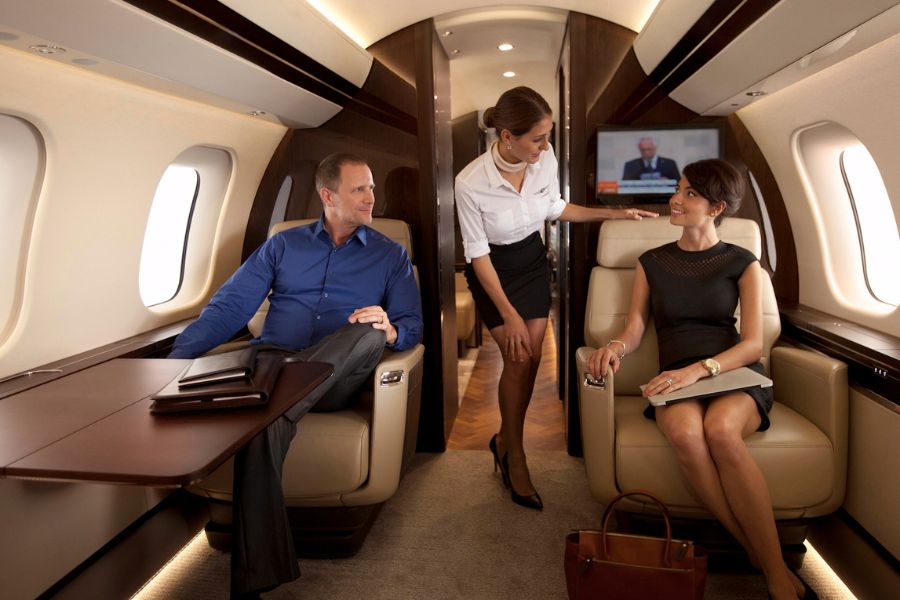
On mid-sized to large cabin jets, a flight attendant will accompany you. On smaller light jets, the pilots handle cabin safety.
- Listen intently to the safety briefing, even if you have heard it many times before. Every aircraft configuration is unique.
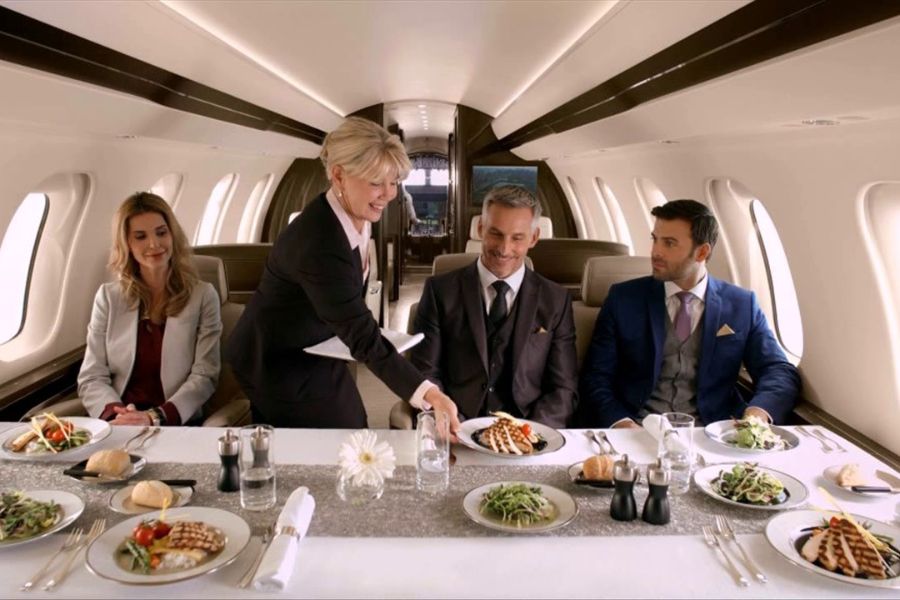
- The flight attendant is there primarily for your safety and secondarily for your comfort. Treat them as a hospitality professional, not as personal servants.
Business Conversations
Private jets are frequently used as airborne boardrooms. If you are invited as a guest on a corporate flight:
- Let the host initiate business discussions.
- Keep your tone modulated. The acoustic environment of a private cabin is incredibly quiet compared to a commercial airliner, meaning secrets travel fast across the cabin.
- If sensitive data is being discussed on screens, be mindful of your line of sight.
Use of Electronic Devices
Most modern private charter flights offer high-speed Wi-Fi, but bandwidth can still be limited depending on the satellite system.
- Avoid downloading massive video files or streaming high-definition content unless you have verified the aircraft’s data plan configuration.
- Use headphones for all audio or video calls out of respect for other passengers.
Guest Behavior
Moderatism is the definitive marker of luxury.
- Alcohol Consumption: While premium wines and spirits are readily available, overindulging is a major breach of etiquette. The effects of alcohol are amplified at cabin altitude, and unruly behavior can force the crew to divert the aircraft.
- Cuisine: If you requested custom catering, enjoy it, but avoid ordering highly pungent foods (like heavy garlic or certain seafood) that can leave a lasting odor in an enclosed space.
Privacy and Confidentiality Expectations
The cornerstone of the private jet passenger guide is absolute discretion. Privacy is the primary commodity people buy when they choose luxury aviation.
Passenger Discretion
Whether you are flying with a tech CEO, a political figure, or a private family, what happens on the aircraft stays on the aircraft. Avoid discussing the details of the flight, the destinations, or the passengers with outsiders after you land.
Photography Considerations
It is natural to want to document an incredible travel experience, but boundaries must be maintained.
- Always ask permission before taking a photo that includes other passengers or the crew.
- Never take photos that accidentally reveal sensitive documents, flight routes on screens, or personal belongings of your host.
Social Media Etiquette
If you are permitted to post photos, follow these guidelines:
- Tagging: Do not tag your host or fellow passengers without their explicit consent.
- Timing: For security reasons, wait until you have landed and departed the airport before posting photos of the aircraft exterior or the interior cabin. Posting real-time locations can compromise passenger security.
- Tail Numbers: Avoid capturing the aircraft’s registration tail number in your photos. Tail numbers allow the public to track the plane’s flight history via open-source flight tracking websites.
Common Mistakes First-Time Private Jet Travelers Make
Even seasoned commercial first-class passengers can fall into common traps during their initial private jet charter experience.
- Overpacking: Assuming that an entire aircraft means unlimited luggage space. Light jets often have strict weight limitations that cannot be overridden.
- Arriving too late: Thinking that a 2:00 PM departure means you can walk into the FBO at 2:05 PM. This delays crew schedules and risks missing air traffic clearance windows.
- Ignoring the dress code: While you don’t need to wear a tuxedo, dressing in ultra-casual beachwear or gym clothing can look out of place, especially if traveling for corporate purposes. Aim for smart-casual or business-casual elegance.
- Assuming pets don’t need paperwork: Private jets are highly pet-friendly, but animals still require passports, vaccination certificates, and entry permits for international destinations.
- Not revealing catering preferences: Forgetting to inform the operator of severe food allergies or dietary restrictions prior to the flight, assuming the galley is fully stocked like a restaurant.
Expert Tips for a Seamless Private Jet Experience
To elevate your travel game from amateur to elite insider, implement these professional strategies:
- Dress in Layers: Cabin temperatures can fluctuate drastically between the ground and cruising altitudes of 45,000 feet. A cashmere scarf or light blazer ensures comfort.
- Bring Cash for Tipping: While not mandatory, it is customary to tip the pilots or flight attendant if they provide exceptional service, especially when helping with heavy luggage or complex catering arrangements. A tip of $50 to $100 per crew member is standard practice in the industry.
- Communicate Your Needs Early: Whether you need a specific brand of sparkling water, a laptop charger, or a specific newspaper, the charter operator can make it happen provided you give them at least 24 to 48 hours of notice.
- Understand the Aircraft Layout: Familiarize yourself with the type of jet you are chartering. A light jet may require you to duck when walking, while an ultra-long-range heavy jet allows you to stand completely upright. Knowing this prevents awkward surprises upon boarding.
Frequently Asked Questions
1. Can I change my departure time at the last minute?
Yes, flexibility is a core benefit of private aviation. However, changes depend heavily on crew duty-time limitations, airport operating hours, and air traffic control slots. Always give the operator as much notice as possible to avoid penalties or operational delays.
2. Is smoking permitted on private charter flights?
As a general rule, smoking (including e-cigarettes and vapes) is strictly prohibited on the vast majority of charter aircraft. The smoke damages the expensive interior upholstery and fouls the cabin air filtration systems. Some aircraft owners allow it, but this must be explicitly requested and arranged during the booking process.
3. How much luggage can I bring on a private jet?
This depends entirely on the size of the aircraft. A light jet may only accommodate 4 to 6 medium-sized bags total across all passengers due to weight limits. Large-cabin jets have massive cargo compartments capable of holding dozens of suitcases. Check with your broker for the exact cubic capacity of your specific aircraft.
4. Do I need to go through customs when flying internationally on a private jet?
Yes. International immigration and customs regulations apply universally to all flights. However, instead of standing in crowded terminal queues, you will experience an expedited process. Customs officers will either board the aircraft to check passports or meet you in a private, dedicated section of the FBO terminal.
5. Who gets to sit in the cockpit?
Passengers must remain in the main cabin during takeoff, flight operations, and landing. On very rare occasions, and solely at the discretion of the Captain when the aircraft is safely leveled at cruising altitude, a passenger might be invited to look into the cockpit. However, for safety and insurance reasons, sitting in the co-pilot seat during flight is generally forbidden on commercial charters.