
Asia Travel Guide & Information, AVIATION NEWS
Layover in Vietnam: Visa Rules, Airport Procedures and Travel Tips
Jun
Planning a layover in Vietnam can be straightforward if you understand the country’s transit rules, airport procedures, and visa requirements in advance. Whether you are connecting through Hanoi, Ho Chi Minh City, or Da Nang, preparation can help you avoid unnecessary delays and missed flights. Many travelers facing tight connections choose a Vietnam Fast Track Service to reduce waiting times during immigration and airport procedures. This guide explains everything international passengers need to know before transiting through Vietnam, from visa considerations to practical airport tips.
What Does a Layover in Vietnam Mean?
In the aviation world, a layover or transit refers to the time spent at an intermediate airport between your point of origin and your final destination. In Vietnam, the exact nature of your layover depends heavily on whether your airline tickets were booked under a single contract or as separate, self-transferred segments.
If your journey is under a single Passenger Name Record (PNR) with a full-service carrier, a layover usually means you will remain in the “sterile” airside zone of the international terminal. However, if you are flying with certain low-cost carriers or have booked two separate tickets, your layover will require you to officially enter the country to collect your bags and check in again, transforming a simple transit into a more complex immigration procedure.
Do You Need a Visa for a Layover in Vietnam?
The most critical question for any international passenger is whether a visa is required during a layover in Vietnam. The answer is not universal; it is determined by your nationality, your airline’s baggage agreements, and your transit duration.
Airside Transit
If your layover is under 24 hours and you intend to stay strictly within the designated international transit area to wait for your connecting flight, you generally do not need a visa. This applies to all nationalities, provided that:
- Your baggage is checked through to your final destination.
- You already hold the boarding pass for your second flight.
- You do not pass through the domestic immigration booths.
Leaving the Airport
If you wish to exit the airport terminal-whether to stay at an off-site hotel, explore the local city during a long daytime stopover, or catch a domestic flight to another Vietnamese city-you must clear immigration and obtain a valid visa, unless your passport qualifies for a waiver.
Visa Exemptions
Vietnam offers generous unilateral and bilateral visa exemptions for citizens of numerous countries. Travelers from many European nations, the United Kingdom, Australia, and ASEAN member states can enter Vietnam visa-free for periods ranging from 14 to 45 days. If your nationality qualifies for an exemption, you can clear immigration during your layover to explore the city without prior paperwork, provided your passport has at least 6 months of validity remaining.
Transit Visa Considerations
If you do not qualify for a visa exemption and your transit itinerary forces you to cross the immigration line (for example, to execute a self-transfer between unconnected airlines), you must apply for a document in advance.
Important Policy Update: While traditional short-term transit visas can be sought via embassies, the vast majority of modern travelers opt to apply for a standard 90-day single-entry Electronic Visa (e-visa) online via the official government portal (evisa.gov.vn). It costs $25, takes approximately 3 to 7 working days to process, and grants total freedom to exit the terminal during your wait. Furthermore, note that passengers transiting through Tan Son Nhat International Airport in Ho Chi Minh City who intend to pass immigration must pre-complete a mandatory digital online health/entry declaration to acquire a QR code before approaching the counter.
Understanding Transit Procedures at Vietnamese Airports
The physical layout of the airport dictates your exact steps upon landing. When executing a Vietnam airport transit, your path will follow one of two primary scenarios.
Scenario A: International to International Transit (Same Terminal)
This is the simplest and most common sequence for long-haul travelers.
1.Follow the Signs: Upon deplaning.
Follow the overhead structural signage marked “International Transfer” or “Connecting Flights”. Do not follow the main crowd toward the Arrival Hall or Immigration lanes.
2.Document Verification: Transfer Desk.
Locate your airline’s dedicated transit desk. Present your passport, luggage tags, and onward ticket. The agent will verify your luggage routing and issue your secondary boarding pass if you do not already possess it.
3.Security Screening: Transit Security Gate.
Pass through the dedicated transit security checkpoint. Here, your carry-on luggage will be scanned, and liquid restrictions (LAGs) will be strictly enforced for the second leg of your journey.
4.Departures Level: Boarding Gate Access.
Take the escalator up to the international departures lounge. You are now free to browse duty-free shops, dine, or access premium airline lounges while waiting for your gate to open.
Scenario B: International to Domestic Transit (Terminal Change)
If your onward flight takes you to another destination within Vietnam (such as Phu Quoc, Nha Trang, or Hue), you must officially enter the country at your first point of entry.
- You must clear immigration using your visa or exemption.
- Proceed to the baggage claim hall to physically retrieve all your checked suitcases from the carousel.
- Walk through customs control.
- Transfer to the separate Domestic Terminal (which often requires a short walk or a terminal shuttle bus) to re-check your bags and pass through domestic security.
Major Airports Commonly Used for International Connections
There are three primary hubs handling the vast majority of international commercial connections within Vietnam.
Hanoi (Noi Bai International Airport – HAN)
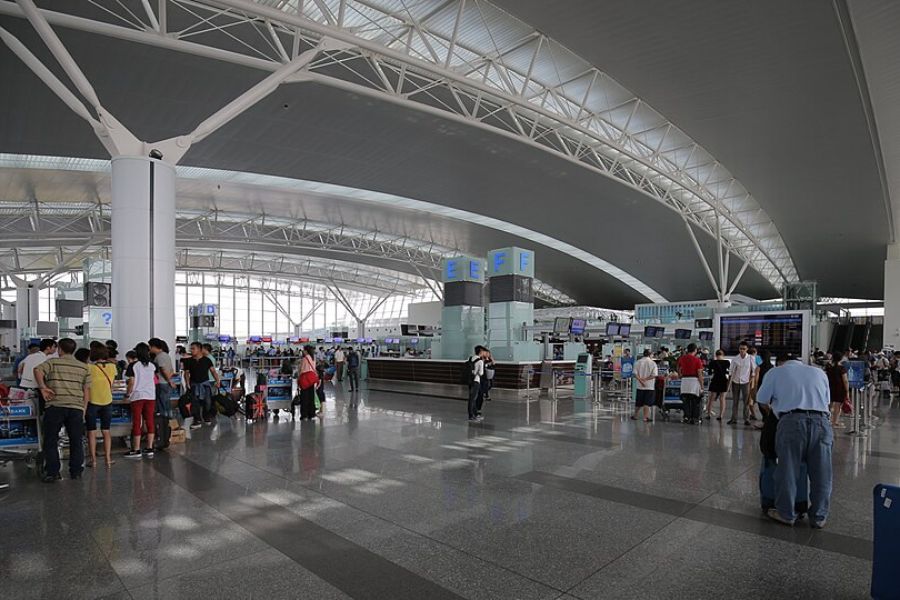
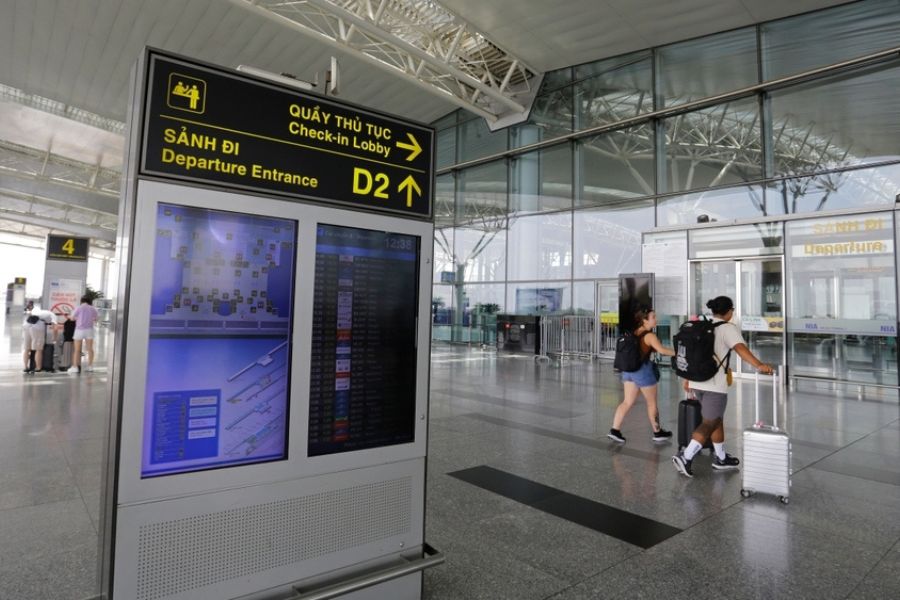
Located in the capital city, Noi Bai is highly organized. International flights land at Terminal 2 (T2), while domestic operations are housed in Terminal 1 (T1). The two buildings are physically separated by a distance of about 1 kilometer. A complimentary electric shuttle bus operates every 15 to 20 minutes to transport passengers between terminals. T2 features excellent modern architecture, duty-free shopping, and multiple premium lounges.
Ho Chi Minh City (Tan Son Nhat International Airport – SGN)
As Vietnam’s busiest airport, Tan Son Nhat is situated right inside the urban heart of Ho Chi Minh City. Terminal 2 handles international flights, while Terminal 1 serves domestic routes. Unlike Hanoi, the two terminals here are positioned side-by-side and connected by a covered outdoor walkway. Walking between them takes less than 10 minutes. Because of the sheer volume of daily passengers, lines at immigration and security check-points can grow intensely long during peak evening blocks.
Da Nang (Da Nang International Airport – DAD)
Serving the central region of the country, Da Nang’s airport is compact, highly modern, and exceptionally efficient. The International Terminal (T2) and Domestic Terminal (T1) are connected directly. Because it handles fewer massive long-haul connections than Hanoi or Saigon, navigating this airport is significantly less stressful, and processing times at security are remarkably swift.
How Much Time Should You Allow Between Connecting Flights?
Determining the appropriate buffer time between flights is the single most vital step in planning a Vietnam layover guide. Giving yourself an inadequate window can lead to missed flights, lost luggage, and immense travel anxiety.
| Connection Type | Recommended Minimum Time | Key Considerations |
| International to International (Single Ticket) | 2 Hours | No need to clear immigration or collect bags; accounts for minor flight delays. |
| International to International (Self-Transfer) | 4 Hours | Must clear immigration, wait for luggage, exit the terminal, and check in fresh at the departures desk. |
| International to Domestic (Hanoi T2 to T1) | 3.5 Hours | Accounts for immigration lines, baggage collection, customs, and taking the terminal shuttle bus. |
| International to Domestic (Saigon T2 to T1) | 3 Hours | Involves clearing immigration, walking to the domestic building, and facing peak-hour check-in queues. |
Common Mistakes Travelers Make During a Layover in Vietnam
Even experienced global frequent flyers occasionally run into roadblocks when transiting through Southeast Asian hubs. Being aware of these pitfalls will keep your journey on track:
- Assuming Automatic Baggage Transfers: Believing your bags will automatically reach your final destination when flying on two separate tickets or low-cost regional airlines. Always ask the check-in agent at your origin airport for absolute clarity on your baggage destination tag.
- Confusing the Terminal Layouts: Walking directly out to the city arrival greeting area in Hanoi or Saigon before confirming if you need to stay airside for an international connection. Once you step out past the customs sliding doors, you cannot walk back into the secure transit zone without an airline representative and a valid visa.
- Underestimating City Traffic: Attempting to leave Tan Son Nhat Airport in Ho Chi Minh City for a quick meal during a brief 4-hour layover. The gridlock surrounding the airport during rush hour can turn a 5-kilometer drive into a 60-minute journey, causing you to miss your flight.
- Forgetting Currency Nuances: Assuming all vendors inside the airside transit zone accept every form of foreign currency. While major credit cards and US Dollars are widely accepted, smaller shops may only take Vietnamese Dong (VND).
Tips for a Smooth Transit Experience
To transform your intermediate stop into an enjoyable part of your itinerary, follow these expert-vetted recommendations:
- Keep Boarding Passes Handy: Keep both your inbound and onward physical boarding passes readily accessible. The transit security officers will check both documents before letting you back up into the departure hall.
- Download Airline Apps: Keep your airline’s mobile application updated to track gate changes in real-time. Gate assignments at major Vietnamese airports fluctuate frequently due to changing ground conditions.
- Book a Lounge Pass: If your layover stretches past 4 hours, consider buying a day-pass to an independent airport lounge (such as the Lotus Lounge or Orchid Lounge). They provide comfortable showers, hot buffets, stable high-speed Wi-Fi, and quiet sleeping pods far removed from the noisy general seating gates.
- Pack Essentials in Your Carry-On: Always carry a fresh change of clothes, basic toiletries (adhering to fluid limits), and all vital electronic chargers in your cabin bag just in case your checked luggage undergoes a delay during the transfer process.
Can You Leave the Airport During a Long Layover?
Yes, leaving the airport boundary is completely feasible and highly recommended if your layover in Vietnam extends beyond 6 to 8 hours.
In Ho Chi Minh City, the airport sits incredibly close to the historical center (District 1). A short 25-minute taxi or ride-share trip allows you to witness iconic monuments like the Notre-Dame Cathedral Basilica, the War Remnants Museum, or enjoy a steaming bowl of traditional Pho at a local restaurant.
In contrast, Hanoi’s Noi Bai Airport is located roughly 35 kilometers north of the city center. It takes at least 45 to 60 minutes each way via taxi to reach the famous Old Quarter. Therefore, if your stopover in Hanoi is less than 7 hours, it is far safer to remain at the terminal or relax at an airport-adjacent transit hotel rather than risking the long commute into the city.
Frequently Asked Questions
1. If I stay inside the airport transit zone overnight, does the terminal close?
No, the international terminals (T2) at both Noi Bai (Hanoi) and Tan Son Nhat (Ho Chi Minh City) operate 24 hours a day, 7 days a week. While some duty-free retail shops and restaurants close during the late-night hours (between midnight and 6:00 AM), basic amenities, restrooms, and select cafes remain open for overnight transit passengers.
2. Can I use ride-sharing apps like Grab at Vietnamese airports?
Yes, Grab is highly popular and fully functional at all major international airports in Vietnam. It is highly recommended over hailing standard street taxis, as the app locks in a transparent price upfront, eliminating any potential language barriers or fare disputes with taxi drivers. Both airports have dedicated pickup lanes marked specifically for ride-sharing vehicles.
3. What happens if my first flight is delayed and I miss my connection?
If your journey was booked on a single ticket, the operating airline bears the legal responsibility to rebook you onto the next available flight to your destination at no extra charge, and they will provide hotel accommodation if an overnight stay becomes necessary. However, if you booked separate tickets on independent airlines, you are responsible for any rebooking costs and may need a visa to exit and re-check in.
4. Are there storage lockers to leave my bags at the airport during a layover?
Yes, both Hanoi (Noi Bai T2) and Ho Chi Minh City (Tan Son Nhat T2) offer secure luggage storage services located within the public arrival halls. If you choose to clear immigration to explore the city during a long layover, you can drop your heavy carry-on bags at these counters for a small hourly or daily fee, allowing you to sightsee completely hands-free.
5. Can I complete my flight connection with an electronic e-boarding pass?
While many international airlines support mobile boarding passes, Vietnamese airport security checkpoints often mandate a physical, printed paper boarding pass stamped by ground staff. If you only possess a digital barcode on your smartphone, it is highly advisable to visit the airline’s transfer desk upon landing to have a standard paper ticket printed before heading to the security lanes.
Conclusion
Mastering a layover in Vietnam comes down to careful preparation and understanding the vital distinction between staying airside and passing through immigration control. By verifying your visa obligations ahead of time, calculating conservative connecting windows, and knowing the specific layout of your arrival hub, you can transform what could be a stressful logistical hurdle into a smooth, efficient, and deeply enjoyable international travel experience.